
David Lynch Movies Every Film in His Visionary Filmography Explained

Introduction — Why David Lynch’s Movies Still Captivate
Have you ever seen a movie that makes you think deeply, long after it ends?
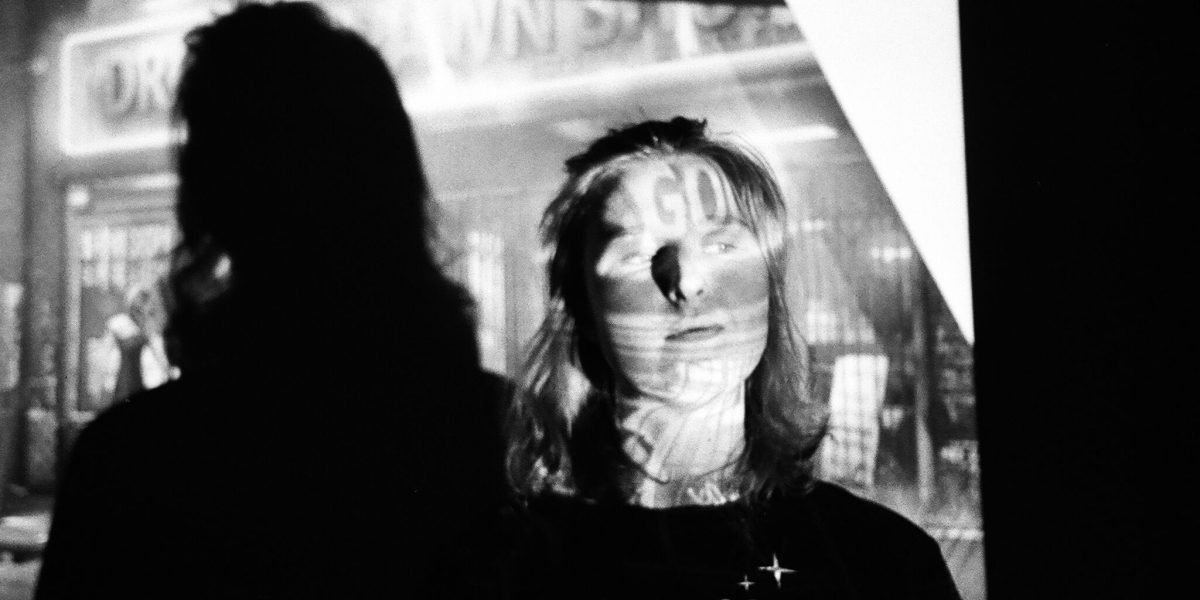
That’s often what happens with david lynch movies. David Lynch is a very special filmmaker known for making movies that are like dreams, sometimes beautiful and sometimes a little bit scary. His films do not always follow a straight line or have easy answers. Instead, they make you feel things and ask big questions.
In this article, we will look closely at all the movies David Lynch has made. We call this his "filmography," which is just a fancy word for all the films a director has created. David Lynch is a great example for anyone who loves movies or studies them, because his work is so unique. It stands apart from many other films you might see, like action movies starring john cena movies or big dramas with actors like joaquin phoenix movies and dennis quaid movies. Lynch’s style is all his own.
This guide will help you understand his major works, the big ideas he often explores, the actors and crew he likes to work with, and the best ways to watch his films. If you enjoy movies that twist your mind and make you see the world differently, then you’re in the right place. For those who enjoy finding unique and interesting films that aren’t always in the spotlight, exploring Lynch’s work can be like discovering some of the Tonic Movies: 10 Hidden Gems and Cult Favorites to Fix Discovery Fatigue.
His stories often bend what we think of as normal reality.
Like Reality-Bending Stories? Try a sci-fi comedy where identity and perspective go sideways. Ridiculous: A comedy of curiosity and perspective
Why David Lynch’s Filmography Matters to Cinephiles
David Lynch is not just any movie director. He is what we call an "auteur." This fancy word means he has a very special and personal way of making films that you can spot right away. His unique style makes all his david lynch movies feel connected, even if their stories are very different. People who love movies, called cinephiles, really care about directors like Lynch because his work is so original.
His films often create a dreamlike world that mixes beauty with a bit of a strange or unsettling feeling. This special touch has made him a cult favorite. Many people deeply love his movies and keep watching them again and again to find new meanings. When you look at all of David Lynch’s work together, his full filmography, you start to see the big ideas he often thinks about. You notice the same kinds of characters, places, and strange events that pop up in many of his stories.
But David Lynch does more than just movies. He also makes TV shows, like the very popular Twin Peaks, and even creates music. For example, his music often adds to the mysterious feel of his films, showing how his creative ideas flow through different art forms, as explored in articles like David Lynch’s Music Was as Unsettlingly Brilliant as His Films.
For students and researchers who study movies, looking at a director’s whole filmography is super important. It helps them understand how film styles change over time and how a director grows. It’s like seeing an artist’s entire journey, from their first ideas to their most famous works. This kind of deep study is a big part of what film schools, like the Department of Cinema and Media Studies at the University of Chicago, focus on. By understanding Lynch’s work, we learn more about how movies can tell stories in new and exciting ways, pushing what we think is possible on screen.
If you enjoy discovering movies that challenge you and explore deep themes, then diving into David Lynch’s filmography is a must.

Many of his most famous works, like Eraserhead and Blue Velvet, came out during the 80s, leaving a lasting mark on cinema. Exploring his films is a great way to find 10 Best 80s Movies that still resonate today.
Early Career and Breakthroughs (1970s–1980s)
After exploring why David Lynch’s entire body of work matters, let’s go back to where it all began. David Lynch’s journey into making movies started with short films. He studied art and film at places like the Pennsylvania Academy of the Fine Arts and the American Film Institute. These early years helped him find his unique voice, which would later make his david lynch movies so special.
His first full-length film, Eraserhead, came out in 1977.
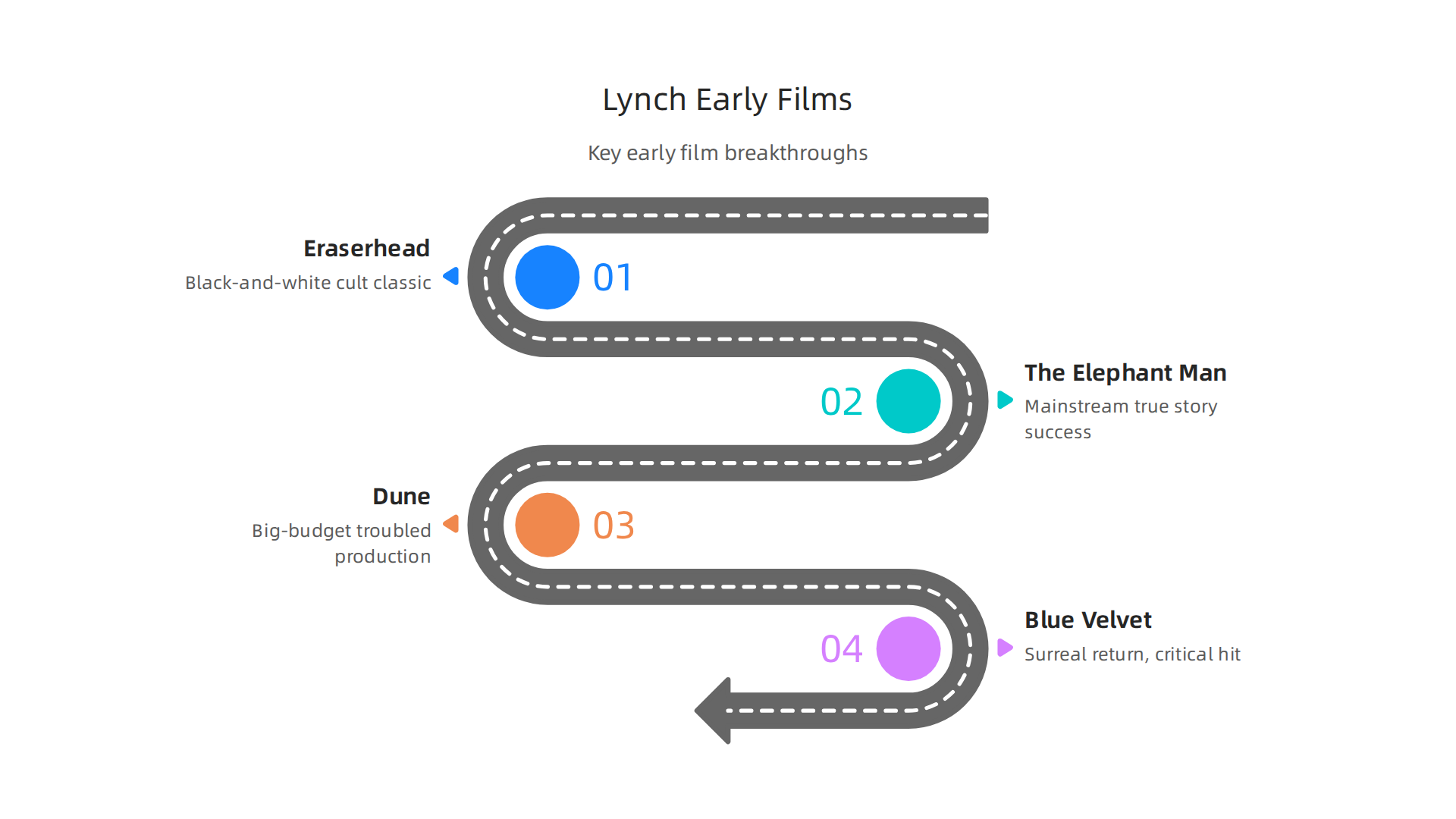
This movie was very unusual, filmed in black and white, and took many years to make because of how hard it was to get money for independent films. It became a "cult classic," meaning a small group of people loved it very much, and its fame grew over time. People saw it at midnight showings and were fascinated by its strange look and feel, showing how independent cinema could thrive outside big studios. Its creation was a long and dedicated process, a common challenge for experimental films, as explored in articles like David Lynch and Eraserhead.
After Eraserhead, Lynch made a big jump to more mainstream movies with The Elephant Man in 1980. This film was very different. It was a true story, and it showed that Lynch could tell a touching story while still keeping his artistic touch. It was a big success and even got many awards nominations. This movie showed Hollywood that he was a director to watch.
Then came Dune in 1984, a science fiction movie that was much bigger and more expensive. This was a tough project for Lynch, and the movie did not do as well as expected. Sometimes, working with big studios can be hard for a director with such a strong personal style.
But Lynch quickly bounced back. In 1986, he directed Blue Velvet. This film brought him back to his original, surreal style and was a huge hit with critics and audiences. It mixed dark secrets with a small-town setting, making people think and feel uneasy in a way only Lynch could. Blue Velvet truly made him a famous name in Hollywood and proved that his unique vision had a place in the film world. These early david lynch movies from the 70s and 80s set the stage for all his amazing work to come. For those who enjoy films from this period that challenge expectations, you might also like discovering other Old Movies That Time Travel Enthusiasts Will Love.
Major Films Deep Dive: Eraserhead, Blue Velvet, Twin Peaks (Film & TV), Mulholland Drive
As we saw, David Lynch’s early work created a special kind of filmmaking. Now, let’s look closer at some of his most famous movies and TV shows.
These works really show his unique way of telling stories, mixing dreams with reality in ways no one else does.
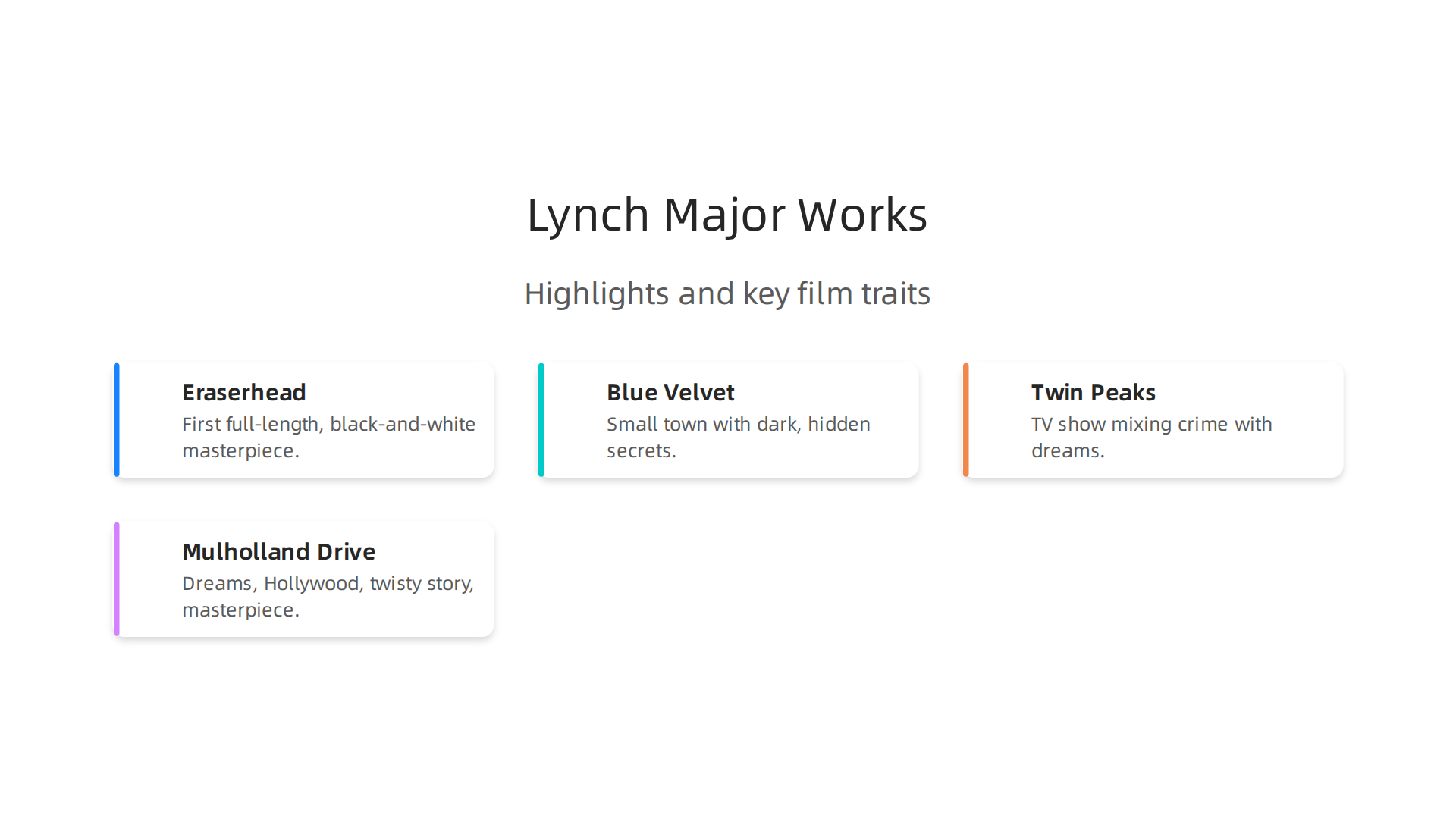
Eraserhead was his very first full-length movie, a black-and-white masterpiece that took years to finish because getting money for it was so hard. It really set the tone for his unusual vision, often looking at troubling ideas and strange pictures. People who study movies often talk about how it uses "dream logic" and how it looks into deep feelings. This makes it a very important film among David Lynch’s movies.
After the difficulties of a larger project like Dune, Lynch went back to his own style with Blue Velvet. This movie showed how good he was at mixing the perfect look of a small town with very dark, hidden secrets. Its story often feels like a dream, pulling you into a world where good and bad are not so clear. The movie made his style well-known and proved his art could be both strange and liked by many. Many people see Blue Velvet as a top example of his surrealist way of making films, using sounds and pictures to create a deep feeling of unease, as explained in The Whispering Winds of David Lynch: “Listen to the Sounds”.
Then came Twin Peaks. This started as a TV show and later became a movie called Twin Peaks: Fire Walk With Me. It changed television for good, mixing crime stories with weird, dream-like parts and characters you can’t forget. The show looked at ideas of good versus evil, mystery, and the darker sides of life in a quiet town. Its special style and way of telling stories made many people rethink what TV could be. Many of David Lynch’s movies and shows often make you wonder what’s real and what’s just a dream. If you enjoy stories that bend reality and challenge your mind, like the intricate plots in many Michelle Pfeiffer movies that bend time and reality, you’ll appreciate the complex stories found in Lynch’s work.
Finally, Mulholland Drive is often called one of the best David Lynch movies and a true masterpiece. It was first meant to be a TV show but became a complicated film about dreams, Hollywood, and who we are. Its twisty story and hidden meanings make people want to watch it again and again to figure out its secrets. Movie experts often talk about its "dream logic," where things happen not by normal rules, but like in a dream, giving you a deep sense of mystery and confusion. It’s a great example of his surrealist style, pushing limits and inviting many different ways to understand it.
In all these films, Lynch uses strange sights, haunting sounds, and characters that are more than they seem. He loves to look into the hidden parts of our minds, making us question what is real and search for meaning in the unusual. These ways of looking at his films, from mind studies to surreal art, are what make his movies so strong and talked about.
If you enjoy stories that make you question reality and play with perspective, you might like something new. Like Reality-Bending Stories? Try a sci-fi comedy where identity and perspective go sideways.
David Lynch’s work often feels like a dream because he uses special tricks and ideas again and again.
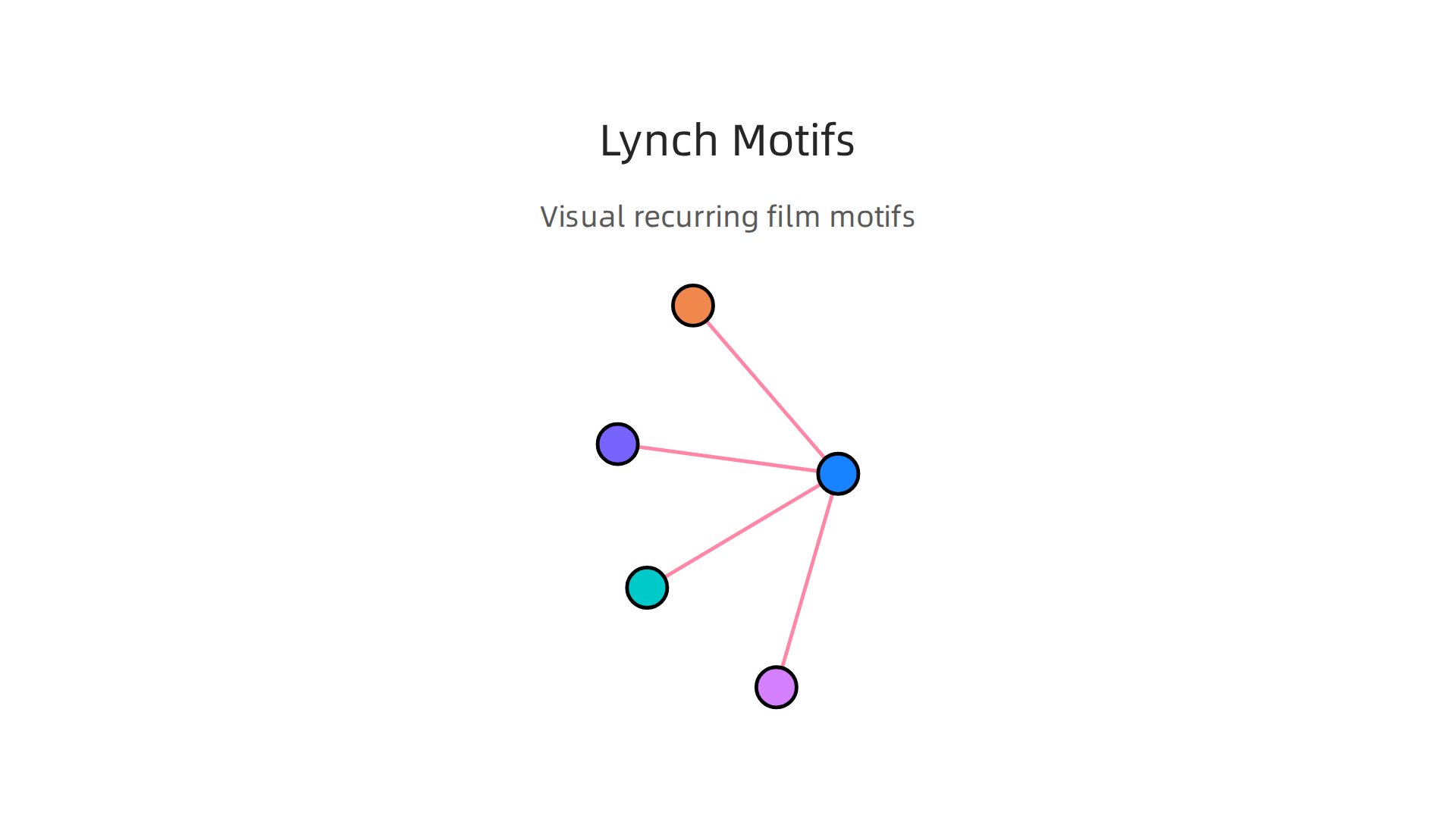
These special touches make his films stand out. He likes to show us a world where normal things are mixed with strange, dream-like moments.
One of his most famous ideas is "dream logic." In his movies, things don’t always happen in a way that makes sense in real life, but more like how they do in a dream. This means feelings and pictures are more important than a clear story. Experts say Lynch is very good at this, making him like a popular artist of dream worlds, as noted in the David Lynch and the Mystery of Being article. This helps us feel the mood and ideas of his films, rather than just follow a straight story. Many of his movies also play with ideas of people having two sides, or even "doubles." Characters might seem one way, but have a dark secret, or they might even have other versions of themselves in the story. This makes you wonder about who is real and what their true goals are.
Lynch also loves to explore the "suburban uncanny." This is when he takes a pretty, quiet town, like the ones you see in pictures, and shows the hidden, scary things underneath. He pulls back the curtain on the perfect life to show something dark and twisted. This is a common thread in many of his David Lynch movies, making viewers feel uneasy about familiar places.
His use of sound is another big part of his style. He doesn’t just use music; he uses strange noises, like whispers, wind, or buzzing sounds, to make you feel a certain way. These sounds are very important in his films and help create a feeling of fear or mystery, as shown by studies into the Affective Incongruity in the Work of David Lynch research. Visually, he uses certain camera angles and lighting that can make things look scary, beautiful, or just plain weird. He might show a close-up of something small that makes you feel uneasy, or use dark shadows to hide things. All these choices work together to pull you into his unique worlds.
These ways of making films create a very strong feeling for the viewer. You might feel confused, scared, or even fascinated. Lynch wants you to think deeply about what you’re seeing and question reality.

If you enjoy films that play with your mind and make you think about different versions of reality, you might also like to explore some 10 time loop movies that challenge your understanding of time. His movies make you want to talk about them, to try and figure out their secrets, and to explore the hidden meanings in every scene.
Want Stranger Sci-Fi? The Ridiculous bends logic for laughs, meaning, and perspective shifts.

Find out more at Want Stranger Sci-Fi?
Beyond his unique vision, much of the lasting impact of David Lynch’s films comes from the talented people he chooses to work with again and again. He builds a kind of family around his projects. These close partners help bring his strange and wonderful ideas to life on screen.
For example, Lynch often casts the same actors in different david lynch movies. Actors like Kyle MacLachlan, Laura Dern, and Naomi Watts have become familiar faces for fans. They can easily switch between roles, playing both normal people and very weird characters. This repeated casting helps create a feeling of knowing the world, even when things get super strange. Other actors he worked with a lot include Harry Dean Stanton, Jack Nance, and Catherine E. Coulson, as noted in a list of frequent David Lynch collaborators. Their faces and ways of acting become part of the Lynch style, making his films feel connected even when the stories are very different. Unlike some films featuring actors like Joaquin Phoenix or Dennis Quaid, Lynch’s movies often rely on this familiar group to build his unique worlds.
It’s not just the actors. Other key people behind the scenes also play a huge part. Angelo Badalamenti, a composer, worked with Lynch on many films, creating the moody and sometimes unsettling music that is so special to david lynch movies. His music often adds to the dream-like feeling, making you feel both calm and a little scared at the same time. Cinematographers, who decide how the movie looks, also help shape his visual style, using special lighting and camera tricks. These trusted team members, from film editors to sound designers, all work together to make sure every part of a Lynch film feels like his film, keeping the strange and wonderful style consistent. If you like looking back at how older films got their special look, you might enjoy exploring some Old Movies That Time Travel Enthusiasts Will Love. This steady group of artists helps make sure that each of his projects, no matter how different the story, carries that clear David Lynch feel.
David Lynch’s unique way of making films doesn’t just stick to his own work. It has also greatly changed how other filmmakers tell stories,

especially in 2026. His strange dream-like worlds and mixing of different kinds of movies have left a big mark. Many modern directors now try to blend genres, much like Lynch did, by adding mystery and surreal moments into their films. This makes their movies feel deeper and more thought-provoking.
His influence isn’t just in movies. It’s also seen in television. Shows today often use his style of slow storytelling, mysterious plots, and characters that aren’t what they seem. This is a direct echo of his groundbreaking show Twin Peaks, which blurred the lines between TV and art. David Lynch’s ability to create deep feelings of unease and wonder has inspired many to experiment with what television can be, making it more like a long movie than a simple series. His impact is so wide that his work is often studied by those looking at the cultural impact of David Lynch on media and art.
Critics and scholars also see Lynch as a true visionary in cinema. His movies, like many of the famous david lynch movies, are often talked about in film schools and art discussions. They are seen as examples of how to push boundaries and create something truly original. Even when people compare his actors, like Kyle MacLachlan, to others like the ones in some joaquin phoenix movies or dennis quaid movies, it’s clear that Lynch’s films stand out. They don’t follow normal movie rules, which is why they are so special and memorable. If you enjoy films that break the mold and have a cult following, you might like exploring some 10 Best 80s Movies Every Time Travel And Cult Fan Needs To Watch.
Lynch’s unique vision means his films don’t always fit into easy boxes. He often uses dark humor, shocking moments, and dream logic to explore complex ideas. This way of bending reality and expectations is what makes his work so powerful and why it keeps influencing new generations of storytellers.
David Lynch’s movies are special, and sometimes it can feel tricky to know where to start watching them. His films are known for their deep meaning and unique look, much like the way he works with his frequent partners to bring his visions to life. Many people ask how to best watch these david lynch movies, especially because they often play with reality.
Curated Viewing Paths for David Lynch Movies
To help you dive into his world, here are a few ways you can watch his films:
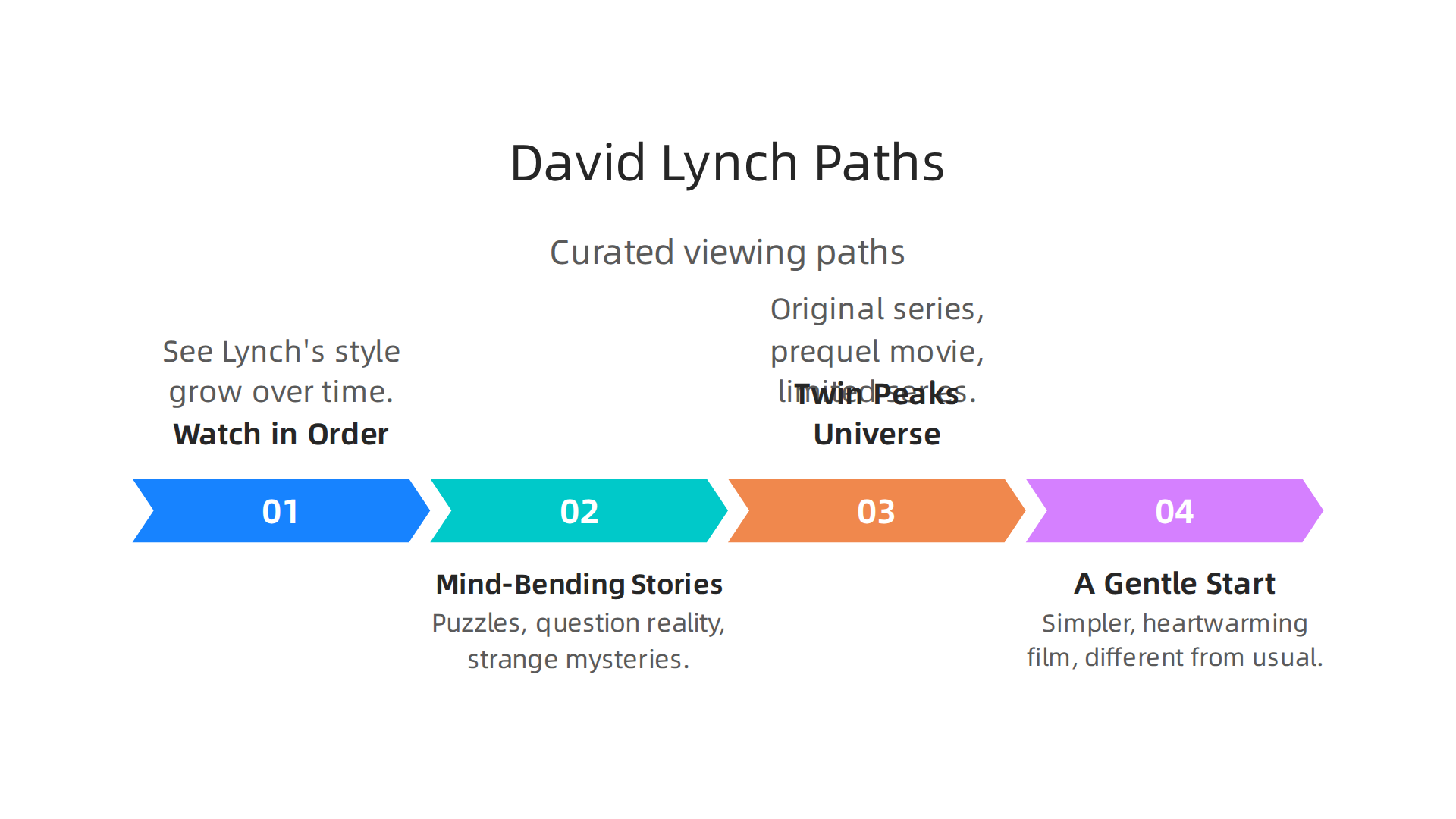
- Watch in Order: If you want to see how David Lynch’s style grew over time, start with his first movie, Eraserhead, from 1977. Then move to films like The Elephant Man (1980), Dune (1984), Blue Velvet (1986), and so on. This path shows you his journey as a filmmaker.
- For Mind-Bending Stories: If you love movies that make you think and question reality, begin with Mulholland Drive (2001) or Lost Highway (1997). These films are like puzzles and are perfect for exploring his dream-like stories and strange mysteries.
- The "Twin Peaks" Universe: Many fans love his TV show Twin Peaks. You could start with the original series (1990-1991), then watch the prequel movie Twin Peaks: Fire Walk with Me (1992), and finish with the recent limited series Twin Peaks: The Return (2017). This gives you the full story in his most famous world.
- A Gentle Start: If you are new to David Lynch, The Straight Story (1999) is a good choice. It’s a simpler, more heartwarming film, which is different from his usual strange movies. It shows his softer side without the usual dark twists.
Where to Find and Preserve Lynch’s Work
Finding some of these films can be a bit of an adventure, even in 2026. Many of David Lynch’s popular movies are available on big streaming services. However, some of his earlier or more independent works might be harder to find.
It’s important to look for restored versions of his films. Older movies can fade over time, so restoration teams work hard to make them look and sound as good as they did when they first came out. These restored versions often have clearer pictures and better sound. Some special collections or film archives might also have them. For fans of unique films, finding these can feel like finding 10 hidden gems and cult favorites to fix discovery fatigue. Sometimes, a movie will get a new release on Blu-ray or a special streaming event with the help of the filmmaker, offering the best viewing experience.
If you enjoy stories that play with your mind and make you see things differently, you might like to explore more.
Like Reality-Bending Stories? Try a sci-fi comedy where identity and perspective go sideways.
Summary
This article is a reader-friendly guide to David Lynch’s filmography, explaining why his work matters to cinephiles and how his distinctive auteur voice reshaped film and television. It surveys Lynch’s early experimental roots with Eraserhead, his mainstream breakthroughs like The Elephant Man and Dune, and later masterpieces such as Blue Velvet, Twin Peaks, and Mulholland Drive. The piece breaks down recurring themes—dream logic, the suburban uncanny, doubles—and the role of sound, cinematography, and a tight circle of collaborators in creating his uncanny worlds. It also maps practical viewing paths for newcomers and returning fans, advises where to look for restored prints and streaming versions, and highlights Lynch’s ongoing influence on modern filmmakers and TV creators. After reading, you’ll understand the key films, stylistic tools, and sensible ways to explore Lynch’s work in chronological or thematic orders.