
Old Movies That Time Travel Enthusiasts Will Love

Why Old Movies Still Matter, Especially for Time Travel Enthusiasts
You open your favorite streaming app and scroll for twenty minutes. Nothing grabs you.

The same superhero sequels. The same franchise reboots. You are not alone. In 2026, global streaming subscribers passed 1.1 billion, and the amount of content has never been bigger. But more choices do not always mean better viewing.
Here is the thing. An old movie often takes risks that modern blockbusters avoid.
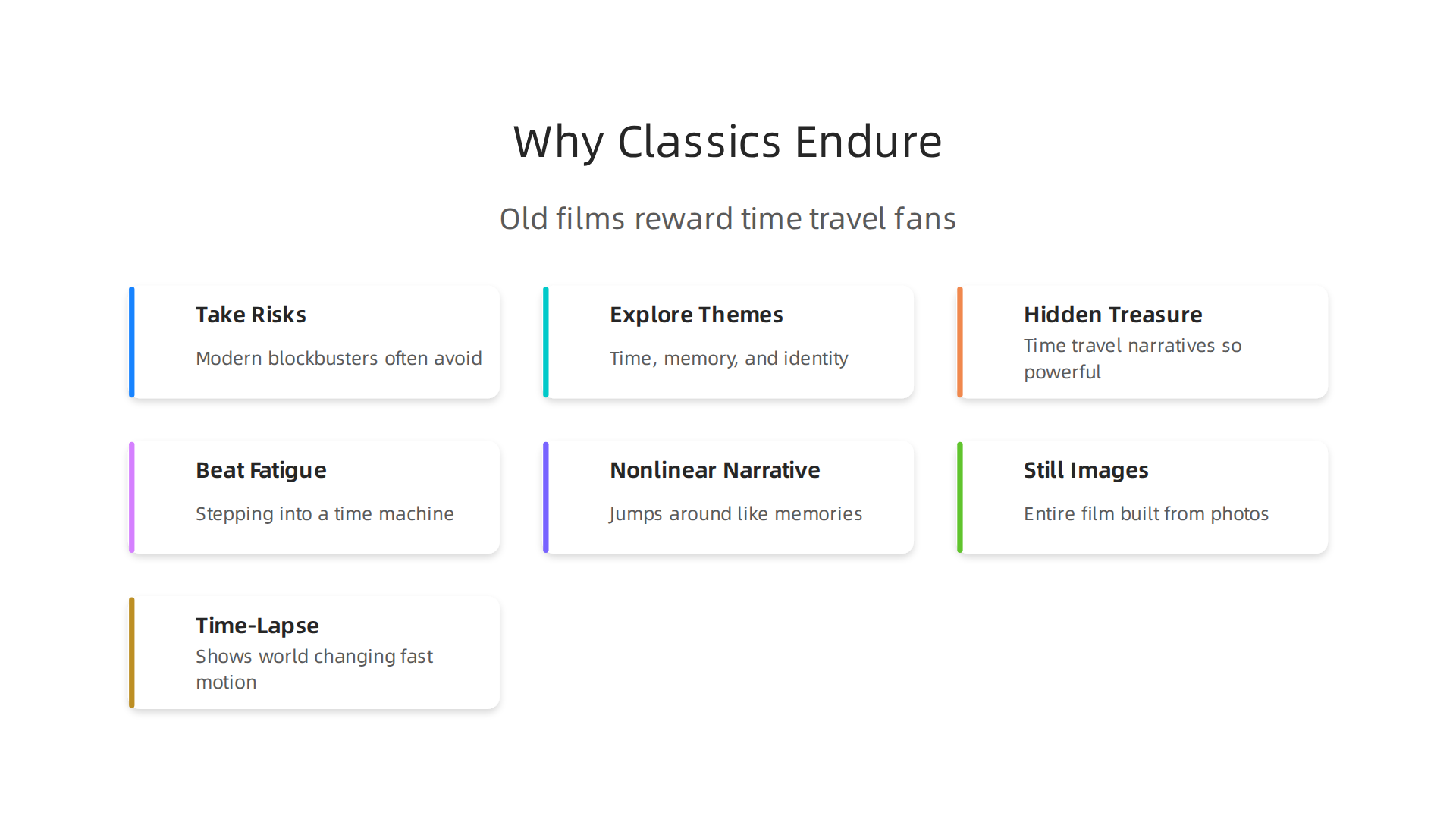
Think about an Annie Hall movie, where the main character talks to the camera and jumps between memories. That kind of storytelling still feels fresh today. Or a Sinbad movie, with its handmade sets and practical effects. These films had to rely on pure creativity, not computer graphics.
For people who love time travel stories, classic films are a hidden treasure. Many older movies explore time, memory, and identity in ways that line up perfectly with time travel themes. A Spotlight movie shows how digging into the past changes everything in the present. A Powder movie asks big questions about being different and misunderstood. These are the same ideas that make time travel narratives so powerful.
In 2026, streaming still rules everyday viewing. But that makes finding hidden gems more valuable than ever. When you are tired of seeing the same suggestions, exploring older films can feel like stepping into a time machine. You just need to know where to look. If you want to beat discovery fatigue, check out our guide to hidden gems and cult favorites that fix discovery fatigue for your next watch.

Like Reality-Bending Stories? Try a sci-fi comedy where identity and perspective go sideways. Sometimes the best way to understand time is to laugh at how weird it all is.
1. Annie Hall: The Romantic Time Travel of Memory
Let us look at the first old movie on our list. Annie Hall won the Oscar for Best Picture in 1978. But what makes it feel like a time travel movie? The answer lies in how it plays with time itself.
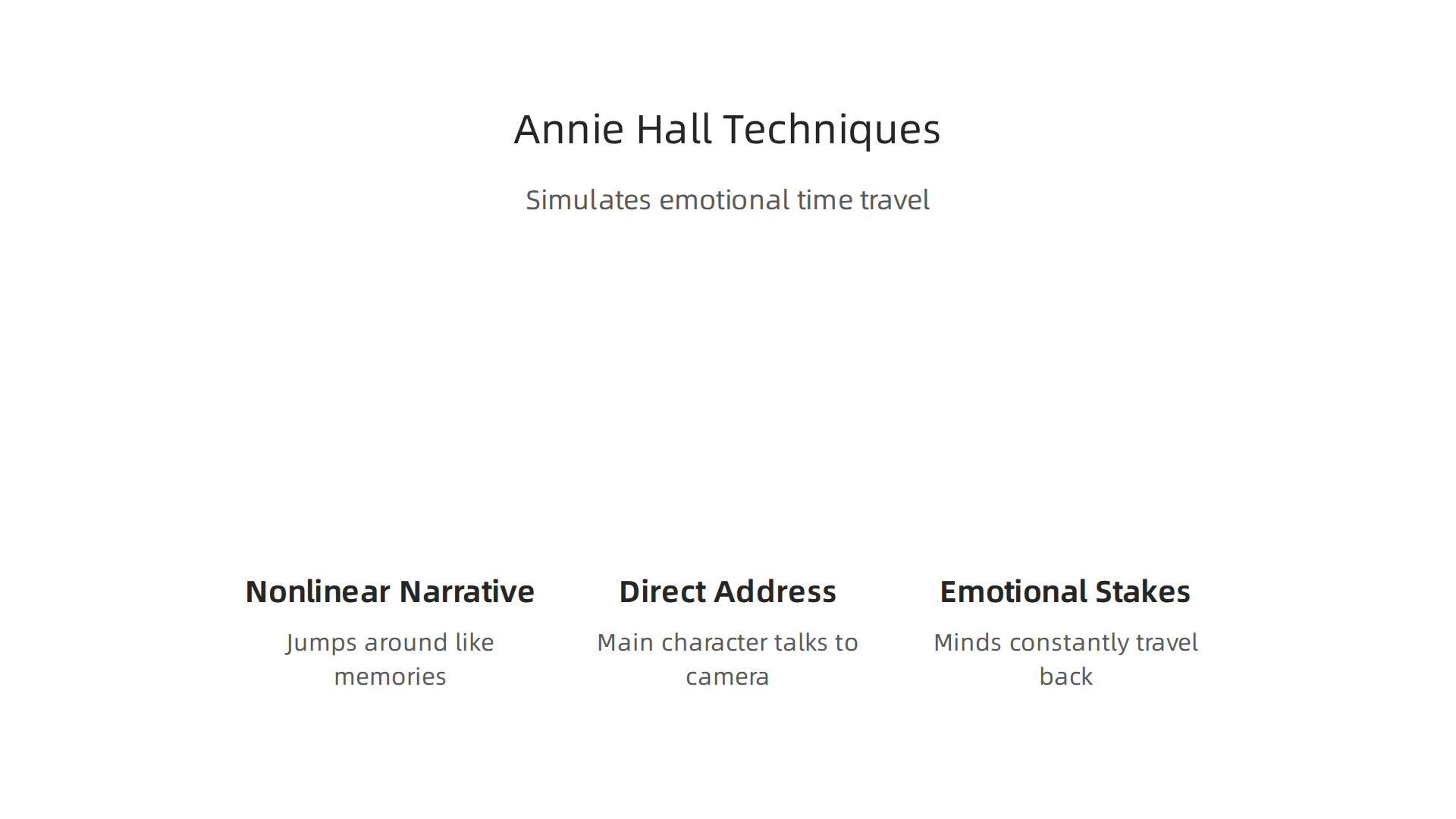
Director Woody Allen breaks the rules of normal storytelling. Scenes jump around in a nonlinear narrative. One moment you are in a comedy club in the 1960s. The next moment you are in a bedroom in the 1970s. This technique perfectly captures how our own memories work. The main character, Alvy Singer, does not just tell a straight story. He relives moments with Annie Hall. He jumps ahead to see how their relationship ends. Then he goes back to the beginning. For time travel fans, this feels very familiar. It is a time machine built on regret and memory.
Alvy also talks directly to the camera. He stops the movie to tell us what he is thinking. He pulls other characters out of their own scenes to have conversations. This direct address makes the audience feel like they are traveling through time with him. A study found that specific brain regions handle these jumps across time, which explains why watching Annie Hall can feel so engaging and surprising.
If you love time travel for the emotional stakes, not just the science, this Annie Hall movie is essential. It is not about a glowing machine. It is about how our minds constantly travel back to understand our present. For a deeper look at emotional time travel, check out our guide on movies that use memory as a time machine.
In 2026, this kind of storytelling still feels bold and original. If you are tired of predictable plots, Annie Hall is the kind of old movie that can rewrite how you see the past.
Like Reality-Bending Stories? Try a sci-fi comedy where identity and perspective go sideways.
2. The Seventh Voyage of Sinbad: Fantasy Escapism with a Temporal Twist
Now let us jump from romantic memory to full fantasy. The Seventh Voyage of Sinbad is a 1958 old movie that feels like a time machine in a completely different way. It does not jump between decades or play tricks with memory. Instead, it uses handcrafted stop-motion animation to build a world that exists outside of time itself.
This is the genius of Ray Harryhausen. He was the master of stop-motion effects. He made monsters move like real, breathing creatures. In this Sinbad movie, you meet a cyclops, a dragon, and a giant two-headed bird. These creatures feel so alive that your brain accepts the impossible. Harryhausen combined stop-motion with live action in a way that changed fantasy cinema forever.
So how does this connect to time travel? Here is the thing. When you watch a time travel film, you agree to bend the rules of reality. The same thing happens here.

You watch a skeleton rise from the ground and fight with a sword. You believe it. That suspension of disbelief is the same muscle time travel stories use.
The story also spans mythical ages. Sinbad sails through seas that feel ancient. He meets creatures from old legends. This is a different kind of temporal journey. It is not about a clock. It is about exploring a world that feels timeless and far away.
This old movie inspired countless modern directors. Spielberg, Jackson, and many others point to Harryhausen as a huge influence. The film remains one of the most influential stop-motion movies ever made.
If you love movies that bend reality, you will also enjoy our list of 10 time loop movies including Palm Springs that redefine the genre. They play with time in ways that hit the same spot.
Want Stranger Sci-Fi? The Ridiculous bends logic for laughs, meaning, and perspective shifts.
3. The Time Machine (1960): The Blueprint for Time Travel Cinema
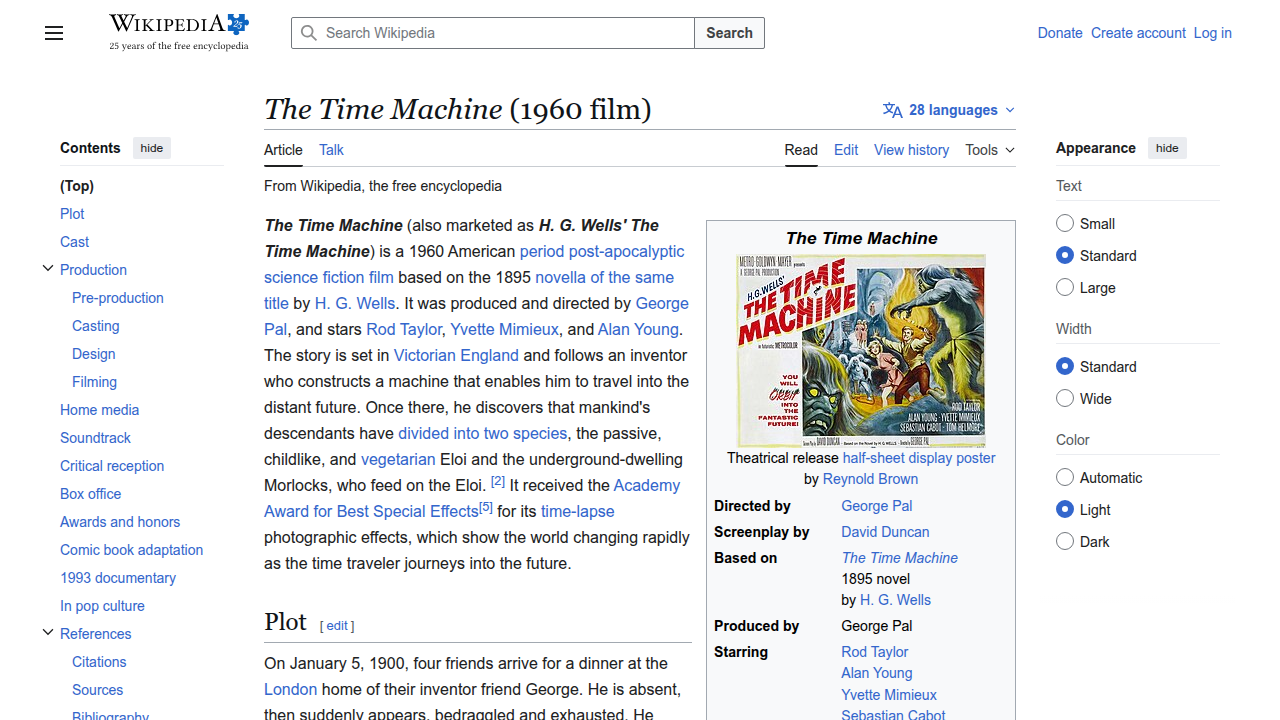
Now we move from fantasy to pure science fiction. And we start with the film that wrote the rules. The Time Machine from 1960 is the old movie that every time travel fan needs to see. It is the blueprint.
Director George Pal adapted H.G. Wells’ novel with deep care. The result is a film that feels both classic and bold. It is an old movie that feels more direct than an annie hall movie because it is driven by science fiction, not romantic memory.
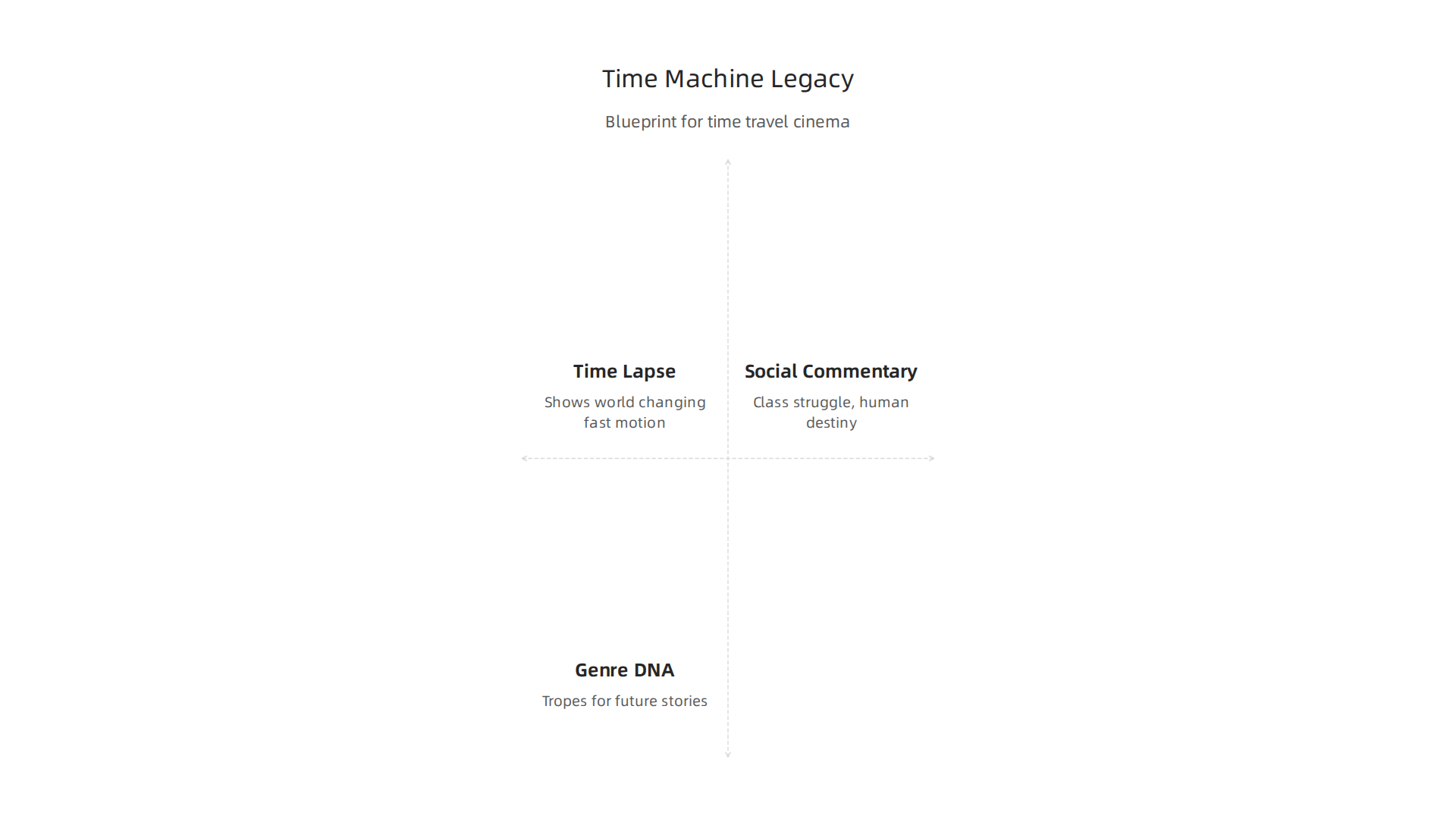
It won an Academy Award for its special effects, specifically for the time-lapse photography that shows the world changing in fast motion (Wikipedia).
You watch seasons fly by. You see buildings rise and fall. It is a simple trick, and it still works perfectly.
This is not just a visual show. The story has real weight. The Time Traveler meets the gentle Eloi and the scary Morlocks. This is a commentary on class struggle and human destiny. It asks big questions about where we are heading (Cool Ass Cinema). That is why the film endures as a genre classic (Inverse).
For anyone who loves time travel movies, watching this original is essential. It is a spotlight movie for the entire genre. You see where all the tropes started. You see the DNA of stories like Back to the Future and Looper.
After you watch it, you will want to see how far the genre has come. Check out our list of the best time travel movies from 2025 and 2026 to see the evolution.
If you enjoy films that challenge how you see reality, you have to try The Ridiculous. It is a modern sci-fi comedy that bends logic and perspective. Like Reality-Bending Stories?
4. La Jetée (1962): The Photo-New Wave Time Travel Masterpiece
What if a movie told its entire story using only frozen moments? That is the radical choice behind La Jetée.
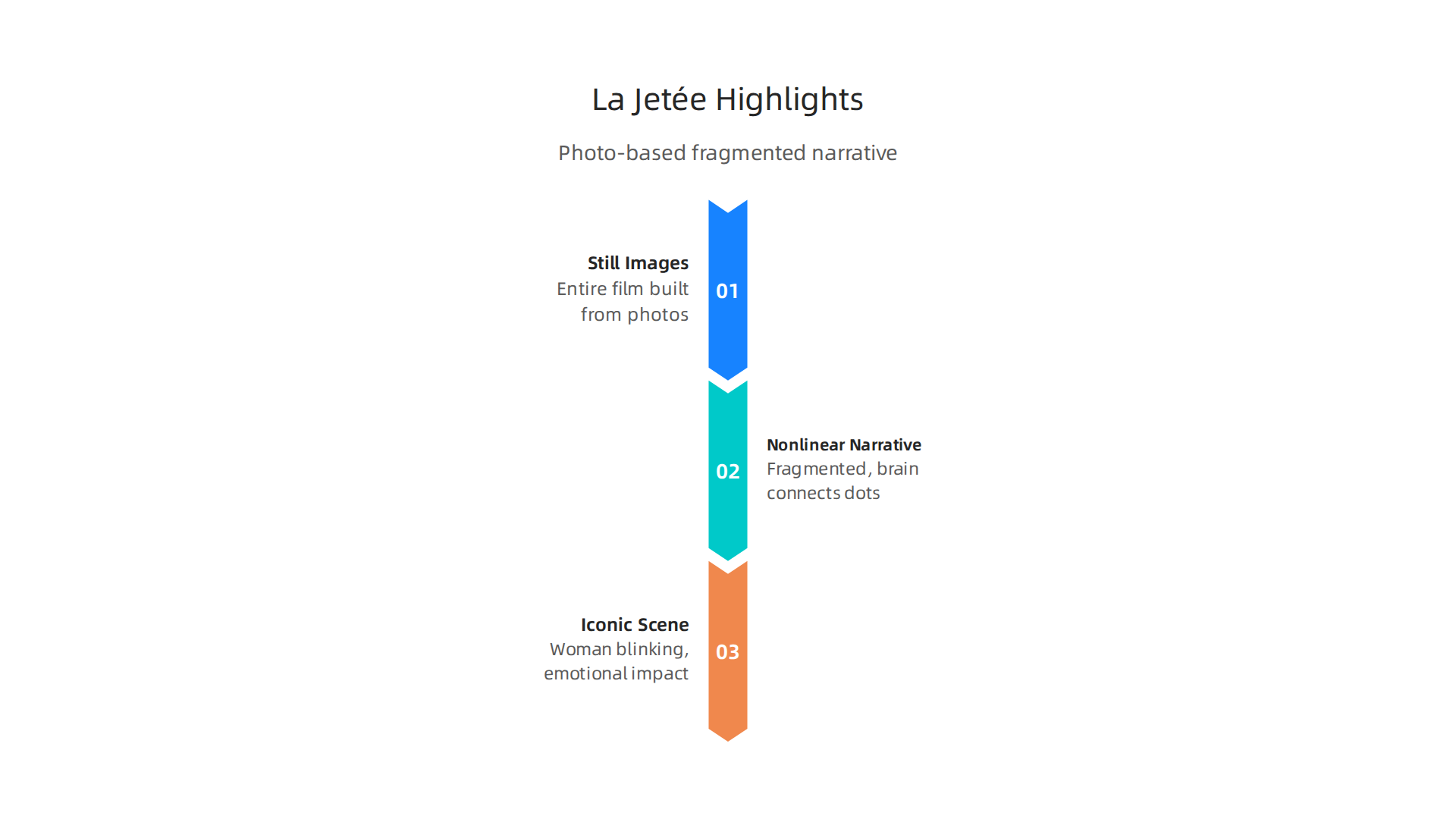
This French short film from 1962 is a 28-minute masterpiece built entirely from still images. It is an old movie that proves you do not need expensive effects to bend time.
Director Chris Marker made a film that feels more like a memory than a story. Every frame is a photograph. Your brain connects the dots. The result is one of the most powerful spotlight movie experiences in the genre.
The story follows a prisoner sent back in time after World War III. He becomes obsessed with a woman he saw as a child. The narrative is nonlinear and fragmented. Research on nonlinear narratives shows that stories like this push our brains to work harder at understanding time and cause (Neural unscrambling of temporal information during a nonlinear narrative). Marker knew this instinctively.
This is not a film you passively watch. It is a film you feel. The still images create a sense of longing and loss. The famous time travel scene is a woman blinking. That is all. And it breaks your heart.
La Jetée directly inspired Terry Gilliam’s 12 Monkeys. It also influenced countless other time loop and memory stories. It is an essential spotlight movie for anyone who wants to understand where modern time travel films get their ideas.
If you enjoy stories that play with memory and time, you will love our list of 10 time loop movies including Palm Springs that redefine the genre. These films owe a debt to Marker’s strange, moving experiment.
For those who appreciate stories that challenge how you see reality, try The Ridiculous. It bends logic and perspective in the same playful spirit. Want Stranger Sci-Fi?
5. The Day the Earth Stood Still (1951): Time, Arrival, and the Other
We just explored a French film made of still images. Now let us step back to 1951. The Day the Earth Stood Still is an old movie that does not involve time machines or loops. But it feels like one. An alien named Klaatu lands in Washington, D.C. with a robot companion named Gort. He brings a message from other worlds. The message is simple: learn to live in peace or face extinction.

This is not a travel through time. It is a travel through space. Yet the effect is the same. The visitor arrives with advanced technology and a warning about human behavior. Many modern time travel films use this same setup. They send a traveler to the past or future to warn us about our choices. The Day the Earth Stood Still does it with an outsider looking in.
The film was born from Cold War fears. People lived under the shadow of nuclear war. Klaatu represents a civilization that already survived that mistake. He comes back to tell us we have a choice. Research on classic sci-fi shows that films like this one and The Time Machine (1960) used genre storytelling to address real world anxieties about technology and power. The 1960 Time Machine won an Academy Award for its special effects, but its heart was the same warning about human nature (The Time Machine (1960 film) – Wikipedia). Both films ask the same question: will we destroy ourselves?
For sci-fi enthusiasts, this is a spotlight movie. It proved that science fiction could be serious. It could ask big questions about morality and survival. It did not need monsters or explosions. It needed ideas.
If you enjoy stories that make you think about where we are heading, check out our list of 10 best 80s movies every time travel and cult fan needs to watch. These films carry the same spirit of questioning the future.
Like Reality-Bending Stories? Try a sci-fi comedy where identity and perspective go sideways. Want Stranger Sci-Fi?
6. Jason and the Argonauts (1963): Mythic Time Travel Through Legend
Now let us move from Cold War warnings to ancient myth. Jason and the Argonauts (1963) is an old movie that does not use a time machine. Yet it works like one. It takes you back to ancient Greece where gods and monsters are real. You watch Jason lead a crew on a quest for the Golden Fleece. Along the way, they fight a giant bronze statue, harpies, and a seven-headed hydra.
What makes this film feel like temporal travel is its mythological world. The historical setting is not accurate. It is a fantasy version of the past. But that is the point. The movie drops you into a time where everything felt bigger and more dangerous. You experience the wonder of a world long gone.
The real star of this film is Ray Harryhausen. He was the master of stop-motion animation. He brought the monsters to life using only his hands and patience. His work has influenced countless filmmakers. In fact, Harryhausen’s impact on cinema is so vast that his films still thrill audiences today (Ray Harryhausen | The grandfather of stop-frame animation). The skeletons fighting Jason’s men remain one of the most famous action scenes in movie history.
This film is a spotlight movie for anyone who loves practical effects. Unlike modern blockbusters that rely on CGI, every monster here was physically built and moved frame by frame. That handmade quality gives the film a magic that digital effects often lack. The same spirit appears in the Sinbad movie The 7th Voyage of Sinbad (1958), also by Harryhausen. Both films prove that you do not need computers to create a timeless adventure.
If you enjoy discovering hidden gems like this one, check out our list of tonic movies: 10 hidden gems and cult favorites to fix discovery fatigue. These films share that same sense of wonder and craftsmanship.
Like Reality-Bending Stories? Try a sci-fi comedy where identity and perspective go sideways. Want Stranger Sci-Fi?
7. Dark Star (1974): The Absurdist Time in Space
Now we leave ancient myths behind and blast into deep space. Dark Star (1974) is an old movie that takes a very different look at time. There is no time machine here either. Instead, you get time dilation and the slow crawl of boredom.
John Carpenter made this film as his debut. He was a student at the time. He and writer Dan O’Bannon created the whole thing for almost no money. In fact, the film started as a student project and grew into a cult classic (Collider: The Greatest Sci-Fi Movies of All Time Owe Everything to Dark Star).
The story follows a crew of astronauts on a twenty-year mission. Their job is to destroy unstable planets. But here is the thing. The mission is boring. The crew is bored. The ship is falling apart. And they argue about things like philosophy and beach balls.
This old movie feels like a spotlight movie for low-budget creativity. Carpenter used leftover materials and smart tricks to make space feel real. The result is a dark comedy that mocks the serious tone of 2001: A Space Odyssey (Review All Monsters: Dark Star (1974)). The crew’s banter has a dry, almost Annie Hall movie quality to it. They joke about existential dread while floating in a tin can.
The bombs on the ship create a powder movie tension. One bomb becomes a character itself. It talks. It questions its purpose. The scene where the crew tries to reason with a bomb is both hilarious and unsettling.
Unlike a Sinbad movie or a grand fantasy, Dark Star is small and weird. It asks big questions about time and meaning. What does time feel like when you have been in space for twenty years? What happens to your mind when nothing changes?

These questions make the film feel smarter than its tiny budget suggests.
If you like movies that blend genres and make you think, check out our list of 10 time loop movies including Palm Springs that redefine the genre. Dark Star belongs in that same brainy, weird category.
Like Reality-Bending Stories? Try a sci-fi comedy where identity and perspective go sideways. Want Stranger Sci-Fi?
8. The Andromeda Strain (1971): Science as Temporal Threat
While Dark Star used boredom and absurdity to explore time, Robert Wise’s The Andromeda Strain turns time into a direct enemy. This 1971 release is an old movie that feels more like a tense experiment than a traditional film.
The plot is simple. A military satellite crashes in a small town, bringing back an alien microbe. It kills almost everyone in the town instantly. A team of scientists in an underground lab have just a few days to figure out what the microbe is and stop it from spreading. The clock is ticking. Every minute matters. This creates a time pressure that feels very similar to a time travel thriller.
Unlike an Annie Hall movie with its witty romance or a Sinbad movie full of fantasy adventures, The Andromeda Strain is cold, clinical, and gripping. Director Robert Wise uses real scientific detail and a slow-building documentary style. The film shows every step of the research. You watch the scientists run tests, fail, and scramble for answers. The tension grows not from explosions but from the relentless passage of time.
This old movie is a spotlight movie for hard science fiction. It respects the viewer’s intelligence. It does not cheat. The ending feels earned because the science feels real. Many fans consider it a powder movie of suspense, where the slightest misstep could cause devastation.
Whether you love time travel movies or just enjoy smart, tense stories, The Andromeda Strain deserves your attention. It is a hidden gem that still holds up today. If you are tired of digging for worthwhile finds, check out our list of Tonic Movies: 10 Hidden Gems and Cult Favorites to Fix Discovery Fatigue. This film belongs on that list.
Want Stranger Sci-Fi? The Ridiculous bends logic for laughs, meaning, and perspective shifts.
Summary
This article argues that older films remain essential viewing for time travel enthusiasts because they bend time, memory, and perspective in ways modern blockbusters often avoid. It walks through eight classic titles—from Woody Allen’s Annie Hall and Chris Marker’s La Jetée to Ray Harryhausen’s Sinbad and George Pal’s The Time Machine—showing how techniques like nonlinear narrative, still-image storytelling, and handcrafted effects create powerful temporal experiences. The piece explains why these films still feel fresh in 2026, how they influenced later genre favorites, and how they teach emotional and philosophical lessons about identity, regret, and human destiny. Readers will learn specific examples of films that act like time machines, why practical effects and minimalist choices matter, and where to look for hidden gems that cut through streaming discovery fatigue. The article connects each movie to broader time-travel themes and points to curated lists for further watching, helping fans find meaningful, surprising classics to expand their viewing habits.